

Writing a book takes time and effort, and without clear goals, it’s easy to get stuck or lose motivation. That’s where SMART goals for authors come in.
By setting goals that are Specific, Measurable, Achievable, Relevant, and Time-Bound, you’ll create a structured writing plan, stay motivated, and ultimately finish your book. In this post, we’ll talk about why having SMART goals for authors is helpful. We’ll also break down the SMART goal framework and show you exactly how to use it so you can write and publish your nonfiction book and use it to build your brand.
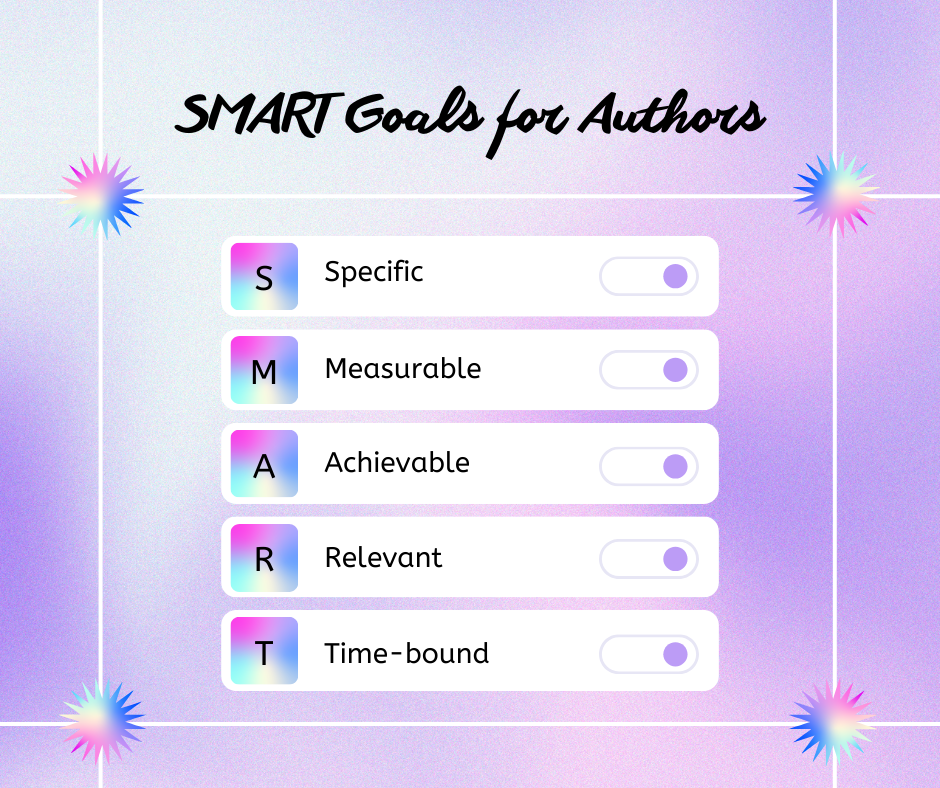
What are SMART goals for authors?
They are goals authors set using the SMART framework. This format ensures that your writing goals are:
- Specific – Clearly defined with no room for vagueness. Anyone should be able to look at the goal as written and look at your results and say, “Yes, you did it,” or “No, you didn’t.”
- Measurable – You can track progress with concrete criteria. Use units that make sense for each goal: miles for running, contacts made for engagements, and hours or words for writing.
- Achievable – Realistic given your time and skills. Don’t set a goal to write a book in a week if you have a family and career.
- Relevant – Aligned with your long-term objectives.
- Time-bound – Set within a specific deadline to maintain momentum.
Using SMART goals helps you stay focused, avoid burnout, and make steady progress toward publishing your book.
Step-by-Step: How to Apply SMART Goals for Authors
Step 1: Make your goal specific.
A vague goal like “I want to write a book” isn’t helpful. Instead, get clear on your book’s topic, target audience, and purpose.
Example of a Specific Goal:
❌ “I want to write a book.”
✔ “I will write a 30,000-word self-help book for busy entrepreneurs.”
Step 2: Ensure your goal is measurable.
You need a way to track your progress so you stay motivated and stay honest with yourself. It could be easy to say you’ve done something when you have no way to prove one way or the other.
Example of a Measurable Goal:
❌ “I’ll work on my book regularly.”
✔ “I will write at least 300 words per day and track my progress in this goal planner.”
📌 Helpful Resource: Use a Printable Writing Planner (coming soon!) to track your writing sessions.
Step 3: Make your goal achievable.
Set a realistic goal that fits your lifestyle and writing speed.
Example of an Achievable Goal:
❌ A woman with a career and a family saying, “I’ll write my 30,000-word book in a week.”
✔ “I will write 2,000 words per week and finish my first draft within 4 months.”
📌 Helpful Resource: Our $10/mo TaskBuddy Club SPRINT sesssions help writers stay accountable and make measurable progress.
Step 4: Keep your goal relevant.
Ask yourself: Does this goal align with my long-term objectives? I’m not saying that everything you do must align with your long-term objectives. there should be room for short-term things and fun. If you want to write a book to build your executive coaching business, then writing a beach read or a memoir about the summer you attended skeet shooting school isn’t going to do it.
Example of a Relevant Goal:
❌ Someone who runs a coaching business saying, “I want to write historical fiction.”
✔ “I will write a nonfiction book to serve readers and attract the best coaching clients for me.”
📌 Helpful Resource: If you need help structuring a book aligned with your business, check out our $400 Coaching Call with Jennifer.
Step 5: Make it time-bound (set a deadline).
Without a deadline, projects tend to drag on. One of my clients came to me after working on his book for 12 years. He had no outline and only the first chapter drafted. I helped him break the goal into bite-size steps, set deadlines including weekly check-ins, held him accountable, and got him to the finish line with that book in a matter of months. So many of my clients and students find this step alone to be very effective.
Example of a Time-Bound Goal:
❌ “I’ll finish my book someday.”
✔ “I will complete my first draft by July 1 and my final draft by October 15.”
Common Pitfalls & How to Avoid Them
❌ Being rigid and getting upset when things take longer → Be flexible! Life happens. If you fall behind, adjust your schedule rather than abandon your goal.
❌ Setting goals that are too vague → Always quantify your writing targets so you can measure success.
❌ Ignoring accountability → Join a writing group or use accountability tools to stay motivated.
📌 Helpful Resource: Our TaskBuddy SPRINT sessions ($10/month) provide structured writing time and instant accountability.
FAQs About SMART Goals for Authors
Q: What if I miss my writing goals?
A: Adjust, don’t abandon. Life happens! Reassess your deadlines and adjust expectations as needed.
Q: How can I track my progress effectively?
A: Use a spreadsheet, writing tracker, or planner to log your word count and milestones.
Q: Can SMART goals for authors help with book marketing?
A: Yes! Apply SMART goals to your marketing plan by setting measurable targets for promotions, social media, and book launches.
Final Thoughts
SMART goals for authors are so important. They give structure to your writing process and help you complete your book without frustration. By setting specific, measurable, and achievable targets, you can make consistent progress and finally publish your book.
Call to Action
Are you ready to set SMART goals for your book?
✅ Join TaskBuddy Sprints for accountability and motivation.
✅ Book a Coaching Call with Jennifer for a tailored writing plan.
✅ Use our Printable Writing Planner to track progress (coming soon!).
Set the first of your SMART goals for authors today!
TL;DR:
Using SMART goals for authors—Specific, Measurable, Achievable, Relevant, and Time-Bound—helps authors stay on track, finish their books efficiently, and reach their writing goals with clarity and confidence.
